-
 Call Now ! +91 - 9247026268
 -
 Email Now info@aakrutisolutions.com
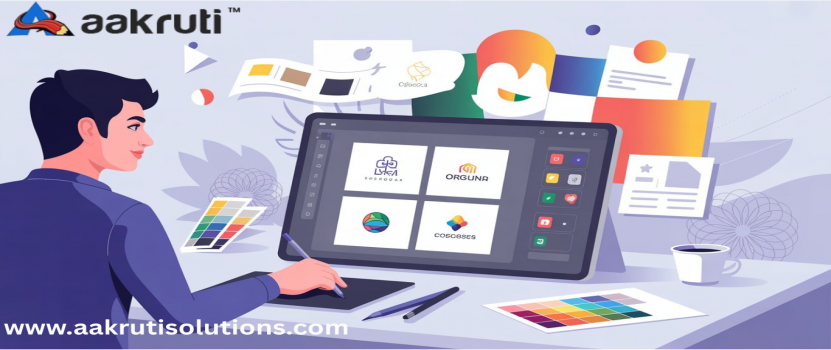
- Logo Designing
- by Admin
- 2025-Nov-15
How to Choose the Right Logo Designer for Your Brand
Why Your Logo Designer Matters
Your logo is the face of your business. It's the first thing customers notice, the visual identity they'll associate with your products or services, and the symbol that will appear on everything from your website to your packaging. Getting it right isn't just important—it's essential for your brand's success and longevity.
But here's the challenge: with thousands of designers available, how do you find the one who truly understands your vision and can bring it to life? The decision you make today will impact your business for years, potentially decades, to come. A poorly chosen designer can result in a generic logo that fails to connect with your audience. In contrast, the right designer creates a visual identity that becomes synonymous with your brand's values and quality.
This comprehensive guide will walk you through everything you need to know about how to choose the right logo designer for your brand, ensuring you make an informed decision that sets your business up for success.
Understanding the Role of a Logo Designer
Before diving into the selection process, let's clarify what a professional logo designer actually does. Many people think designers simply make things look pretty, but their role goes much deeper than aesthetics.
A skilled logo designer is part strategist, part artist, and part psychologist. They research your industry, study your competitors, understand your target audience, and then translate all this information into a visual symbol that communicates your brand's essence at a glance.
Strategic Thinking: Great designers don't start with colors and shapes—they begin with questions. Who are your customers? What emotions should your brand evoke? What makes you different from competitors? They use these answers to inform every design decision.
Visual Communication: Designers understand how colors affect emotions, how typography conveys personality, and how shapes can communicate stability, innovation, or approachability. They speak the language of visual communication fluently.
Technical Expertise: Beyond creativity, professional designers master technical aspects like scalability, color theory, file formats, and reproduction across different media. Your logo needs to look perfect, whether it's on a tiny app icon or a massive billboard.
Brand Architecture: A logo designer doesn't work in isolation. They consider how your logo fits within your broader brand identity and how it will work alongside other visual elements as your brand grows.
Understanding this comprehensive role helps you appreciate why choosing the right designer matters so much and what to look for during your search.
Why a Professional Logo Design Is Worth the Investment
You might be tempted to save money by using a logo template, asking a friend with design software to help, or using an automated logo generator. While these options seem budget-friendly initially, they often cost much more in the long run.
Brand Confusion: Generic or amateur logos fail to differentiate you from competitors. In crowded markets, this invisibility directly impacts your ability to attract and retain customers.
Credibility Issues: Consumers judge businesses by their visual presentation. A professional logo signals that you're serious about your business and committed to quality. An amateur logo suggests the opposite, potentially driving customers toward competitors with more polished branding.
Costly Rebrands: Many businesses that initially cut corners on logo design eventually need to rebrand once they realize their logo isn't serving them well. Rebranding costs more than getting it right the first time, plus you lose any brand recognition you've built with your original logo.
Versatility Problems: Amateur logos often don't work across all applications. They might look fine on a website, but become illegible when small or difficult to reproduce on merchandise. Professional designers create logos that perform beautifully everywhere.
Legal Complications: Using templates or stock elements can lead to trademark issues if other businesses use similar designs. Professional designers create original work that's uniquely yours.
Think of your logo as the foundation of your brand. Just as you wouldn't build a house on a weak foundation, don't build your brand on a weak visual identity. The investment in professional logo design pays dividends through stronger market presence, customer trust, and brand longevity.
Define Your Brand Before You Hire a Designer
One of the biggest mistakes businesses make is hiring a designer before they've clearly defined their brand. Understanding how to choose the right logo designer for your brand starts with understanding your brand itself.
Before reaching out to any designers, get crystal clear on these fundamental aspects:
Your Brand Values: What principles guide your business? Are you innovative and cutting-edge, or traditional and reliable? Are you playful or serious? Your logo should reflect these core values instantly.
Your Target Audience: Who are you trying to reach? A logo that appeals to teenagers will look vastly different from one targeting corporate executives or young parents. Understanding your audience ensures your designer creates something that resonates with the right people.
Your Brand Personality: If your brand were a person, what would they be like? Professional and sophisticated? Friendly and approachable? Bold and adventurous? This personality should come through in your visual identity.
Your Unique Positioning: What makes you different from competitors? Why should customers choose you? Your logo should hint at what makes you special without being literally descriptive.
Your Brand Story: Every business has a story—how it started, what problem it solves, why it exists. While your logo won't tell the entire story, it can evoke the emotions and values at your story's heart.
Create a brand brief document summarizing these points before your first designer conversation. This preparation ensures productive discussions and helps designers understand exactly what you need. It also serves as a filter—designers who take time to understand this information are more likely to deliver strategic work than those who jump straight into creating.
Types of Logo Designers: Which One Do You Need?
The design world offers several types of professionals, each with different strengths, working styles, and price points. Understanding these options helps you choose what's right for your needs and budget.
Freelance Designers: Independent designers work directly with you, often providing personalized attention and flexibility. They're ideal for businesses wanting hands-on collaboration and direct communication with the creative mind behind their logo. Freelancers range from beginners building portfolios to seasoned experts with decades of experience.
Design Agencies: Agencies employ teams of specialists—strategists, designers, project managers—who collaborate on your project. They offer comprehensive branding services, established processes, and multiple designers contributing ideas. Agencies work well for businesses needing complete brand identity systems beyond just a logo.
Branding Specialists: These designers focus specifically on brand identity and strategy. They're more expensive than general designers but bring deep expertise in creating logos that work as part of comprehensive brand systems.
Online Design Platforms: Services like 99designs or Fiverr connect you with designers worldwide through contests or direct hiring. Quality varies dramatically, and you might sacrifice the local market understanding and direct collaboration that comes with nearby professionals.
In-House Designers: Hiring a full-time designer makes sense if you have ongoing design needs, but for most small to medium businesses, it's not cost-effective for a single logo project.
When searching for Logo Designers in Hyderabad, you'll find talented professionals across all these categories. Consider your budget, timeline, and how much involvement you want in the creative process when deciding which type suits your needs best.
Where to Find the Best Logo Designers
Knowing where to look significantly impacts the quality of designers you'll find. Here are the most effective channels for discovering talented professionals:
Professional Design Directories: Platforms like Behance, Dribbble, and Awwwards showcase portfolios from designers worldwide. You can filter by location, style, and industry experience.
Local Business Networks: Your chamber of commerce, business associations, and networking groups often have designer members or can provide referrals based on other businesses' experiences.
Google Search: Searching for "Logo Designers in Hyderabad" connects you with local professionals who understand your market. Look beyond the first few results and check multiple designers to compare styles and offerings.
Social Media: Instagram and LinkedIn are excellent for discovering designers. Many professionals showcase their work and process on these platforms, giving you insight into their style and thinking.
Referrals: Ask other business owners whose branding you admire who designed their logos. Personal referrals often lead to the best matches because you can hear firsthand about the designer's working style, communication, and results.
Design Agencies: Established agencies like Aakruti Solutions offer the advantage of proven processes, diverse portfolios, and comprehensive services. They combine multiple designers' expertise to ensure high-quality results.
Professional Associations: Organizations like AIGA (American Institute of Graphic Arts) maintain directories of credentialed designers who meet professional standards.
Don't limit yourself to one channel. Explore multiple sources, bookmark designers whose work resonates with you, and gradually narrow your list to your top 3-5 candidates for deeper evaluation.
How to Evaluate a Logo Designer's Portfolio
A designer's portfolio is your window into their capabilities, creativity, and whether they're the right fit for your brand. But looking at pretty pictures isn't enough—you need to analyze their work critically.
Assess Versatility: Do they demonstrate range across different industries and styles, or does everything look similar? While signature styles aren't necessarily bad, you want someone who adapts to your specific needs rather than forcing you into their template.
Check for Simplicity: The best logos are deceptively simple. They work in black and white, remain recognizable at small sizes, and don't rely on complex details that disappear in reproduction. If a portfolio is full of overly complicated designs, that's a red flag.
Look for Originality: Each logo should feel unique and purposeful. If you're seeing lots of generic symbols—globes for international companies, light bulbs for innovation, or leaves for eco-friendly businesses—the designer might rely on clichés rather than creative problem-solving.
Evaluate Industry Experience: Have they worked with businesses similar to yours? While you don't want a copycat design, industry experience means they understand the visual language that resonates with your audience and helps you stand out from competitors.
Consider Timelessness: Great logos transcend trends. While incorporating contemporary design principles is fine, the logos shouldn't look dated within a few years. Look for portfolios demonstrating classic design principles that ensure longevity.
Examine Context: Good portfolios show logos in real-world applications—on business cards, websites, packaging, or signage. This demonstrates the designer thinks beyond the logo itself to how it functions across your brand ecosystem.
Read Case Studies: Designers who provide context about their problem-solving approach, research process, and strategic thinking demonstrate they're not just making things look nice but solving business challenges through design.
Understanding how to choose the right logo designer for your brand means looking past surface-level aesthetics to evaluate strategic thinking and problem-solving abilities.
Key Questions to Ask Before Hiring a Logo Designer
Once you've narrowed your list to a few candidates, schedule conversations to determine who's the best fit, here are essential questions that reveal their expertise, process, and compatibility with your needs:
"What's your design process from start to finish?" This reveals whether they follow a strategic methodology or just create what looks pretty. Look for answers mentioning research, discovery, concept development, refinement, and finalization.
"What information do you need from me?" Quality designers require substantial input about your business, audience, competitors, and goals. If they need very little, they're probably not designing strategically.
"How many initial concepts will you present?" This varies by designer, but typically expect 2-4 distinct concepts. Too few limits your options; too many suggest they're throwing ideas at the wall rather than thinking strategically.
"How many revision rounds are included?" Understanding what's included prevents surprises later. Most designers offer 2-3 revision rounds, which should be sufficient with good communication.
"What file formats will I receive?" You should get vector files (AI, EPS, or SVG) that scale infinitely without quality loss, plus raster formats (PNG, JPG) for different uses. You should also receive various versions—full color, black and white, horizontal, vertical, and icon versions.
"Will I own the copyright to my logo?" Clarify ownership before signing anything. You should receive full rights upon final payment, allowing you to use your logo however you want without restrictions.
"What's your timeline?" Quality design takes time. Be suspicious of anyone promising professional results in days. Typical timelines run 2-4 weeks, depending on project complexity.
"Can you show examples of logos you've designed for similar businesses?" This helps you visualize their capabilities in your specific industry context.
"Do you provide brand guidelines?" Even basic guidelines about logo usage, colors, and fonts help maintain consistency as your brand grows.
"What happens if I'm not satisfied with the final result?" Understanding their satisfaction policy upfront prevents conflicts later.
The quality of their answers matters as much as the answers themselves. Do they communicate clearly? Do they seem genuinely interested in your project? Trust your instincts about whether you'll work well together.
Understanding the Logo Design Process
Knowing what to expect during the logo design journey helps you collaborate effectively and recognize whether your designer is thorough and professional.
Phase 1: Discovery (1-3 days): This crucial phase involves the designer learning everything about your business, industry, competitors, and goals. Expect questionnaires, interviews, or research sessions. This groundwork ensures strategic design rather than random creation.
Phase 2: Research and Brainstorming (2-5 days): The designer researches your industry, analyzes competitors' visual identities, studies your target audience, and explores design directions that might work for your brand. This happens mostly behind the scenes.
Phase 3: Concept Development (3-7 days): Based on discovery and research, the designer creates initial logo concepts. These might be sketches or more refined digital versions, depending on their process. Expect 2-4 distinct concepts representing different strategic directions.
Phase 4: Presentation and Feedback (1-2 days): The designer presents concepts with explanations of the thinking behind each one. This isn't just showing pretty pictures—they should articulate why specific design choices support your brand strategy. You provide feedback, asking questions and expressing preferences.
Phase 5: Refinement (3-7 days): Based on your feedback, the designer refines your chosen direction. This might happen over multiple rounds, with each iteration getting closer to the perfect final logo. Good communication during this phase is crucial.
Phase 6: Finalization (2-3 days): Once you approve the final design, the designer prepares all file formats, variations, and potentially basic brand guidelines. You receive everything you need to start using your new logo across all applications.
Phase 7: Support (Ongoing): Many designers offer post-project support for questions about logo usage or minor adjustments. Clarify what's included and for how long.
This entire process typically takes 2-4 weeks, though it can be shorter or longer depending on project complexity and how quickly you provide feedback. Rushing produces inferior results, so plan accordingly and give your designer time to do great work.
Common Mistakes to Avoid When Choosing a Logo Designer
Learning from others' mistakes saves you time, money, and frustration. Here are the most common pitfalls and how to avoid them:
Choosing Based Solely on Price: The cheapest option rarely delivers the best value. Extremely low prices indicate inexperience, rushed work, or stock elements rather than original design. Balance budget consciousness with quality expectations.
Not Checking References: Beautiful portfolios don't guarantee good client experiences. Always check references to learn about communication style, reliability, receptiveness to feedback, and overall professionalism.
Involving Too Many Decision-Makers: Getting input from your entire team, family, and friends creates conflicting feedback that paralyzes the design process. Limit decision-makers to one or two key stakeholders who understand your brand vision.
Being Too Prescriptive: While your input is essential, micromanaging every design choice prevents your designer from using their expertise. Provide clear direction about your brand, but give them creative freedom to solve problems their way.
Ignoring Your Gut Feeling: If something feels off during initial conversations—poor communication, lack of enthusiasm, or personality clashes—trust your instincts. You'll work closely with this person, so compatibility matters.
Rushing the Process: Pressure to launch quickly leads to hasty decisions you'll regret later. Quality design takes time for research, concept development, and refinement. Plan to avoid rushing.
Not Clarifying Rights and Ownership: Assuming you'll own your logo without explicitly confirming this in writing can lead to unpleasant surprises. Always clarify ownership terms before signing anything.
Accepting the First Concept: Even if you love the first concept presented, review all options. Sometimes, designs that don't immediately grab you reveal their strengths upon deeper consideration.
Forgetting Long-Term Needs: Consider how your logo will work as your business grows. Will it translate to new products, markets, or applications? Think beyond your immediate needs.
Not Reading Contracts Carefully: Always review contracts thoroughly before signing. Understand deliverables, timelines, payment terms, revision policies, and what happens if you're unsatisfied.
Avoiding these mistakes increases your chances of a smooth process and a logo that truly serves your brand for years to come.
Pricing Guide: How Much Does a Professional Logo Design Cost in 2025?
Understanding typical pricing helps you budget appropriately and make informed decisions when investing in your brand identity. Logo design pricing varies based on several factors, and the good news is that professional design is more accessible than many businesses realize.
Budget-Friendly Professional Services (₹5,000 - ₹10,000): Many talented designers and agencies offer quality logo design at affordable rates, making professional branding accessible to startups and small businesses. At Aakruti Solutions, we understand that every business deserves professional branding regardless of budget. That's why we offer comprehensive logo design packages starting at just ₹6,000, which include not only your custom logo but also complimentary visiting card and letterhead designs—giving you a complete brand identity suite to launch your business professionally.
Mid-Range Services (₹10,000 - ₹25,000): This range typically includes more extensive brand identity packages with additional deliverables like social media kits, brand guidelines, multiple logo variations, and extended revision rounds.
Premium Freelancers (₹25,000 - ₹75,000): Highly experienced independent designers with impressive portfolios and specialized expertise. They often work with established businesses looking for sophisticated brand evolution or repositioning.
Large Design Agencies (₹75,000 - ₹3,00,000+): Full-service agencies offering comprehensive brand strategy, market research, complete identity systems, and ongoing brand management. These are typically suited for larger companies with substantial marketing budgets.
Enterprise Branding Firms (₹3,00,000+): International branding consultancies serving major corporations with complex brand architecture needs, extensive market research, and global rollout strategies.
What Affects Pricing:
- Experience and Portfolio Quality: More established designers typically charge higher rates, but newer, talented designers often deliver excellent value
- Scope of Deliverables: A logo-only package costs less than a complete brand identity system with multiple components
- Number of Concepts: More initial design directions typically increase costs
- Revision Rounds: Packages with unlimited revisions cost more than those with defined revision limits
- Timeline Requirements: Rush projects may incur additional fees
- Additional Services: Brand strategy, market research, or ongoing support add to base costs
- Usage Rights: Full copyright transfer versus licensing affects final pricing
Understanding True Value:
The cheapest option isn't always the best value, but expensive doesn't automatically mean better. When evaluating Logo Designers in Hyderabad, look for the sweet spot where professional quality meets fair pricing. Consider what's included in each package—a ₹6,000 package that includes logo, visiting cards, and letterheads offers more value than a ₹8,000 logo-only service.
Also consider the long-term value. A well-designed logo serves your business for years, potentially decades. A ₹6,000 investment that effectively represents your brand for ten years costs just ₹50 per month—less than a single business lunch—while building brand recognition and customer trust worth far more.
What You Should Expect for Your Investment:
At a minimum, a professional logo design should include:
- Multiple initial concept options (typically 2-4)
- At least 2 rounds of revisions
- Final logo files in various formats (vector and raster)
- Different logo variations (full color, black & white, horizontal, icon versions)
- Full ownership and copyright transfer
Many agencies, including Aakruti Solutions, go beyond these basics by including complementary materials that help you implement your new brand identity immediately. Our ₹6,000 package gives you everything you need to start presenting your business professionally from day one.
Beware of These Pricing Red Flags:
- Extremely Low Prices (Under ₹3,000): Often indicates use of templates, stock graphics, or very inexperienced designers
- No Clear Deliverables: If pricing doesn't specify what you're getting, ask for clarification
- Hidden Costs: Watch for additional charges for file formats, revisions, or usage rights
- Pay-Per-Revision Models: These can become expensive quickly; prefer packages with defined revision rounds
The goal isn't finding the cheapest option but finding the best value—professional quality that fits your budget and includes the deliverables you need to launch your brand successfully.
What Makes a Great Logo: Traits to Look for in the Final Design
Understanding what makes logos successful helps you evaluate proposals and recognize when you've found the right design. Great logos share these characteristics:
Simplicity: The best logos are beautifully simple. They communicate instantly without requiring a detailed explanation. Think Apple's Apple, Nike's swoosh, or McDonald's golden arches. Simplicity ensures recognition, memorability, and functionality across all applications.
Memorability: Your logo should stick in people's minds after just one or two exposures. Distinctive design choices—whether through unique shapes, clever negative space, or unexpected color combinations—create memorability without complexity.
Timelessness: Trends come and go, but great logos endure. While incorporating contemporary design principles is fine, avoid trendy elements that will feel dated quickly. Classic design principles ensure your logo serves your brand for decades, not just until the next design trend emerges.
Versatility: Your logo must work everywhere—tiny app icons, massive billboards, black and white newspaper ads, embroidered polo shirts, and everything in between. Test designs at various sizes and in different color configurations to ensure they remain effective everywhere.
Appropriateness: Great logos feel right for their brands and industries. A playful logo works for a children's toy company but not a law firm. Your logo should intuitively communicate your brand's personality and values to your target audience.
Distinctiveness: Your logo should stand out from competitors and avoid generic symbols common in your industry. While it should feel appropriate for your field, it shouldn't look like every other business in your space.
Scalability: Technical excellence matters. Logos should be designed as vectors that scale infinitely without quality loss. They should work in full color, but also remain recognizable in single colors or black and white.
When reviewing designs from your chosen designer, evaluate them against these criteria. Ask yourself: Is it simple enough to be memorable? Will it feel current in ten years? Does it work at thumbnail size? Does it feel right for my brand? Does it stand out from competitors?
Understanding how to choose the right logo designer for your brand includes recognizing when they've delivered a design that meets these standards of excellence.
Real Examples: Successful Brand Logos and the Designers Behind Them
Looking at successful logos and understanding the thinking behind them provides valuable lessons for your own logo journey.
Apple (Designed by Rob Janoff, 1977): The iconic bitten apple is a masterclass in simplicity. The bite serves a practical purpose—ensuring the apple isn't mistaken for a cherry—while creating a memorable, distinctive element. Originally rainbow-striped, it evolved into the sleek monochrome version we know today, demonstrating how simple logos adapt easily to changing design trends.
Nike Swoosh (Designed by Carolyn Davidson, 1971): One of the world's most recognizable logos was created by a graphic design student for just $35 (though Nike later compensated her generously). The swoosh suggests motion and speed through a single, dynamic curve. Its simplicity allows it to work at any size and even stand alone without the company name.
FedEx (Designed by Lindon Leader, 1994): This logo demonstrates the power of clever subtlety. Most people don't immediately notice the arrow formed by the negative space between the E and X, but once you see it, you can't unsee it. This hidden element creates memorability and reinforces FedEx's core message of forward movement and precision.
Amazon (Designed by Turner Duckworth, 2000): The smile/arrow connecting A to Z communicates multiple messages: they sell everything from A to Z, and they make customers happy. This multi-layered meaning within a simple element exemplifies strategic design thinking.
Coca-Cola (Designed by Frank Mason Robinson, 1886): Sometimes, timeless design means maintaining consistency. Coca-Cola's script logo has remained largely unchanged for over 130 years, becoming one of the world's most recognized symbols through consistency rather than frequent redesigns.
These examples share common traits: simplicity, strategic thinking, and designs that communicate beyond just looking attractive. They weren't created randomly but resulted from understanding the brand, the audience, and what message needed to be expressed visually.
When working with your chosen designer, don't expect them to create the next Apple logo—but do expect them to apply the same level of strategic thinking to create a logo that serves your specific brand needs as effectively as these logos serve their brands.
Final Checklist Before You Hire Your Logo Designer
You've done your research, reviewed portfolios, and conducted interviews. Before signing any contracts or making payments, run through this final checklist to ensure you're making the right choice:
Portfolio Quality:
- Have you reviewed their complete portfolio, not just featured pieces?
- Do their designs demonstrate versatility across industries and styles?
- Are logos simple, memorable, and appropriate for their respective brands?
- Do you see evidence of strategic thinking, not just pretty pictures?
Communication and Compatibility:
- Did they ask thoughtful questions about your business and goals?
- Do they explain design concepts clearly without relying on jargon?
- Are they responsive to emails and calls?
- Do you feel comfortable working with them?
Process and Professionalism:
- Did they explain their design process clearly?
- Do they follow established procedures rather than winging it?
- Have they provided a clear contract outlining deliverables, timeline, and costs?
- Are revision policies and timelines clearly defined?
References and Reviews:
- Have you checked multiple references or reviews?
- Did past clients report positive experiences?
- Are there any concerning patterns in feedback?
Deliverables and Rights:
- Will you receive vector files (AI, EPS, SVG) and raster files (PNG, JPG)?
- Are multiple logo variations included (horizontal, vertical, icon versions)?
- Will you receive full copyright and ownership rights?
- Are usage guidelines or brand standards included or available?
Budget and Value:
- Does the pricing align with your budget?
- Do you understand exactly what's included in the quoted price?
- Does the value justify the investment?
- Are payment terms clear and reasonable?
Timeline:
- Is the proposed timeline realistic for quality work?
- Does it align with your launch or rebranding schedule?
- Are there contingencies if revisions take longer than expected?
Long-Term Considerations:
- Have you considered whether you might need ongoing design support?
- Does this designer/agency offer additional branding services you might need?
- Are they available for future projects or consultations?
If you can confidently check most or all of these boxes, you're ready to move forward. If several items raise concerns, consider revisiting your decision or addressing these issues before committing.
Conclusion: Building Your Brand Starts with the Right Designer
Your logo is more than just a pretty picture—it's the foundation of your brand identity, the symbol that will represent your business across every customer touchpoint for years to come. Choosing the right designer to create this crucial asset deserves careful consideration and thorough research.
Throughout this guide, we've explored how to choose the right logo designer for your brand by understanding what professional designers do, defining your brand identity first, evaluating different types of designers, analyzing portfolios critically, asking the right questions, and avoiding common mistakes that lead to unsatisfactory results.
Remember these key takeaways as you move forward:
Invest in Quality: Your logo serves your business for years, making it worth investing in professional design that creates lasting value rather than cutting corners with cheap alternatives that require costly rebranding later.
Prioritize Strategy Over Aesthetics: Pretty logos are nice, but strategic logos that communicate your brand values and resonate with your target audience deliver real business results.
Trust the Process: Quality design takes time. Give your chosen designer space to research, create, and refine without rushing them toward quick results that sacrifice quality.
Communicate Clearly: Your designer can't read your mind. Provide comprehensive information about your brand, clear feedback on concepts, and open communication throughout the process.
Think Long-Term: Consider not just your immediate needs but how your logo will serve you as your business grows and evolves.
Whether you're searching for talented Logo Designers in Hyderabad or exploring other options, the time you invest in finding the right designer pays dividends through a logo that effectively represents your brand, resonates with your audience, and stands the test of time.
At Aakruti Solutions, we understand that creating the perfect logo requires more than just design skills—it demands strategic thinking, a deep understanding of your brand and market, and commitment to delivering work that truly serves your business goals. Our comprehensive approach combines creative excellence with strategic insight to create logos that don't just look great but work hard for your brand every day.
Your brand deserves a visual identity that makes customers stop, look, and remember. By following the guidance in this article on how to choose the right logo designer for your brand, you're well-equipped to make an informed decision that sets your business up for long-term success.
Ready to Transform Your Brand Identity?
Aakruti Solutions makes professional branding accessible to every business. For just ₹6,000, you get a complete brand identity package including:
- Custom logo design with multiple concepts
- Professional visiting card design
- Letterhead design
- Various file formats for all applications
- Full ownership and copyright
- Dedicated support throughout the process
Don't let your business blend into the crowd with generic branding. Let our experienced design team create a logo that captures your brand's unique personality and connects with your target audience.
Contact Aakruti Solutions Today: 📞 Call us at +91 9247026268 to schedule your free brand consultation 📧 Email us at info@aakrutisolutions.com to discuss your project requirements 🌐 Visit our portfolio to see how we've helped businesses like yours stand out
Your perfect logo is just one conversation away. Let's build a brand identity that drives recognition, trust, and growth for your business. Contact Aakruti Solutions now and start your brand transformation journey!