Introduction:
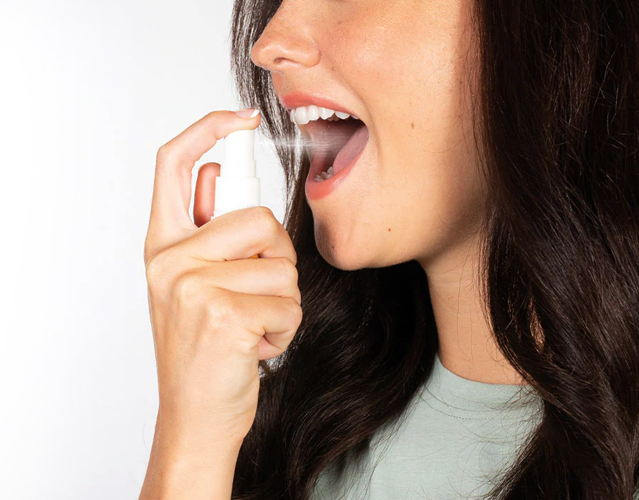
Over the last three decades, intraoral dosage forms have been evolving as an acceptable and in some cases as the preferred, alternative to conventional tablets and capsules. Among them, Oral sprays are the fastest, most effective and comfortable way to take medicines, nutrients, minerals and vitamins. They have been acquiring important position in the market by overcoming previously encountered administration problems and contributing to extension of patent life. Oral sprays have the unique property of rapidly releasing the drug in the oral cavity, thus obviating the requirement of water during administration. Therefore, these dosage forms have lured the market for a certain section of the patient population which includes dysphasic, bed ridden, and psychic, geriatric patients. This article focuses on the Trans mucosalview, spray formulation aspects, advances made so far in the field oral sprays and patented technologies.
Children may also have difficulty in ingesting because of their underdeveloped muscular and nervous systems.
The problem of swallowing tablets is also evident in travelling patients who may not have ready access to water. Many people do not take medicines simply because they cannot or do not like to swallow pills. That loss could have a negative effect on one’s health.
The oral cavity (OC) and its highly permeable mucosal tissues have been taken advantage of for decades as a site of absorption for delivery of drugs to the systemic circulation (oral trans mucosal delivery, OTD), and for local delivery to the subjacent tissues (oral mucosal delivery, OMD). Administration of an active agent in a dosage form intended to release the drug in the oral cavity is referred as an intraoral delivery system or intraoral dosage form (IOD).
The first evidence of drug absorption via the buccal mucosa was noted over 100 years ago. Subsequently, in 1879, sublingual administration of nitroglycerin was reported to successfully alleviate the symptoms of classic angina pectoris. Since then, oral mucosal drug delivery has drawn more and more attention because of its potential advantages over other routes of delivery. The concept of an aerosol originated as early as 1790, when self-pressurized carbonated beverages were introduced in France. Oral sprays are the fastest, most effective and convenient way to get a daily dose of vitamins, minerals, and other nutritional supplements. The design of oral sprays came out with a purpose to improve patient’s compliance. These dosage forms rapidly releases the drug in intra oral cavity, thus obviating the need for water during administration, an attribute that makes them highly attractive for pediatric and geriatric patients who need frequent or immediate medical intervention. Aforementioned problems can be resolved by means of Oral sprays.
Advantages of oral sprays extent this phenomenon affects the efficiency of oral trans mucosal:
- The intraoral or sublingual spray method of delivery is also very helpful for individuals who have difficulty swallowing pills or capsules and, since a lower dosage is required, it is cost effective.
- Potential faster absorption could translate into faster onset of action.
- Patient’s compliance for disabled bedridden patients and for travelling and busy people who do not have ready access to water.
- Ease of administration to patients who cannot swallow, such as the elderly, stroke.
- Victims and bedridden patients; patients who should not swallow, such as renal failure patients; and who refuse to swallow, such as pediatrics, geriatric and Psychiatricpatients.
- Pre gastric absorption can result in improved bioavailability, reduced dose and improved clinical performance by reducing side effects.
- New business opportunities: product differentiation, line extension and life-cycle management, exclusivity of product promotion and patent-life extension.
- Sprays do not contain fillers or binders, contrary to the make-up of pills, providing exclusion of additional excipient.
Factors Affecting Drug Absorption:
- Degree of Ionization, pH, and Lipid Solubility
- Molecular Size and Weight
- Permeability Coefficient
The primary challenges for these routes of delivery are:
- The varying structure of the mucosal membrane in different parts of the oral cavity and the reduced permeation due to the barrier presented by the mucosal epithelial layers
- The constant presence of saliva, which prevents the retention of the formulation in one area of the oral cavity leading to shorter contact time
- Person to person variability caused by differences in tongue movements, saliva amounts, and saliva content
- The limited surface area available for absorption
- Ensuring patient comfort with a dosage form easy to spray and not causing any local reactions, discomfort, or erythema.
An aerosol formulation consists of two essential components:
- Product concentrate
- Propellant
Product concentrate:
The product concentrate consist of active ingredients, or a mixture of active ingredients and other necessary agents such as Penetration enhancers*, solvents, antioxidants, flavoring agents, sweeteners, hydrophilic polymers, preservatives, acidifying agents, co-solvent.
Penetration enhancers
Enhancers have been used to increase the permeation of drugs through the membrane, and thus increase the subsequent bioavailability. These should be pharmacologically inert and nontoxic, and should have reversible effects on the physicochemical properties of the oral mucosa.
Propellants:
The propellant provides the force that expels the product concentrate from the container and additionally is responsible for the delivery of the formulation in the proper form (i.e., spray, foam, semisolid). When the propellant is a liquefied gas or a mixture of liquefied gases, it can also serve as the solvent or vehicle for the product concentrate.
Ideal properties of propellants :
- It should be non-toxic
- It must be pure
- It should be free from irritation effect
- It should have good solvent action on numbers of therapeutically active ingredients
- It should be chemically inert and non-reactive.
- It should be non-flammable