Introduction:
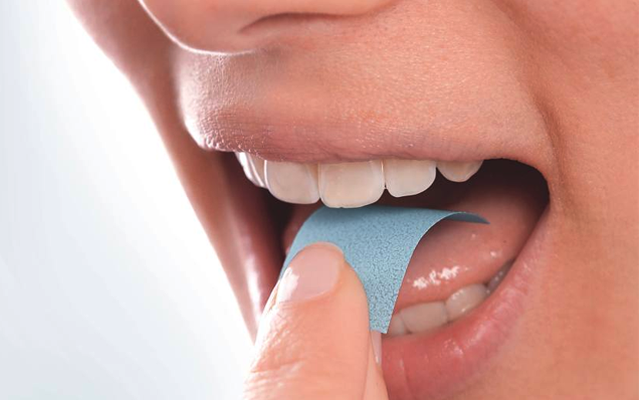
Oral disintegrating films are first developed in 1970’s alternative to tablets and capsules .This are the solid dosage form which is thin polymeric strip incorporating and delivering pharmaceutical active ingredients when it is placed on the tongue and drug releases in the oral cavity.
This are also called as
- Oral thin film
- Buccal Strips
- Mouth dissolving strips
- Oral Disintegrating films
Special features of Mouth dissolving films:
- Thin elegant film
- Available in various size and shape
- Unobstructive
- Excellent Mucoadhesion
- Fast disintegration
- Rapid release
- Can be administered without water
Ideal Characteristics of a drug to be selected:
- Pleasant taste
- Low dose up to 40mg
- Smaller and moderate molecular weights
- Good stability and solubility in water / saliva
- Partially unionized at the pH of Oral cavity
Properties of Oral Films:
| Property | Flash release | Mucoadhesive melt release | Mucoadhesive sustain release |
|---|---|---|---|
| Area (cm2) | 2-8 | 2-7 | 2-4 |
| Thickness(μm) | 20-70 | 50-500 | 50-250 |
| Structure | Film single layer | Single or multilayer | Multilayer |
| Excipients | Soluble, highly hydrophilic polymer | Soluble , hydrophilic polymer | Low/non soluble polymer |
| Drug Phase | Solid solution | Solid solution/ Suspended drug particle | Suspension or solid solution |
| Application | Tongue (Upper Plate) | Gingival or buccal region | Gingival |
| Dissolution | Max 60 sec | Disintegration in few mins, Forming gel | Max 8 - 10hrs |
| Site of Action | Systemic or Local | Systemic or Local | Systemic or Local |
Advantages:
- Ease of administration
- No water needed
- No water needed
- No risk of choking
- Taste masking
- Enhanced stability
- First pass metabolism can be avoided
- Improved patient compliance
Disadvantages
High dose cannot be incorporated
ODF advantages over ODT:
| Oral Disintegrating film | Oral disintegrating tablet |
|---|---|
| Large surface area gives greater dissolution | Less surface area gives less dissolution |
| Films are flexible & durable | Tablets are brittle & less durable |
| No risk of choking | Risk of choking |
| More patient compliance | Less patient compliance |
| No need of water | Need water for administration |
| First pass metabolism can be avoided | No such advantages over films |
| Faster onset of action | Slower onset of action |
Oral Film Formulation:
| Ingredients | Examples | Amount( w/w) |
|---|---|---|
| Drug | Ondasetron | 1-25% |
| Film forming Polymer | Hydroxypropyl methyl cellulose | 40-50% |
| Plasticizer | Propylene glycol | 0-20% |
| Surfactants | Sodium lauryl sulfate | q.s |
| Saliva stimulating agent | Citric acid | 2-6% |
| Sweetening agent | Galactose/Glucose | 3-6% |
| Flavoring agent, Color, Thickener | Menthol, Xanthan Gum | q.s |
Manufacturing Methods:
- Solvent casting method
- Hot melt extrusion method
- Semisolid casting method
- Rolling method
- Solid dispersion extrusion
Oral Film Formulation:
| Parameters | Condition |
|---|---|
| Thickness test | 5-200 μm |
| Dryness test | - |
| Tensile strength | TS= Load of breakage/strip thickness*Strip width |
| Percentage Elongation | % elongation= Increase in length x 100/original length |
| Young’s modulus | YM= [Slope/Strip thickness*cross head speed]/100 = 0.30±0.07MPa |
| Transparency | T= [logT600]/b=-€c |
| Contact Angle | - |
| Scanning electron Microscopy | X1000 magnification |
| In-Vitro disintegration test | 5-30 secs |
| In-Vitro dissolution test | @37 ̊C with speed of 50 rpm |
| Stability studies | @45 ̊C / 75% RH for 3 months |
Mechanism of Action:
- Delivery system is simply place film on the tongue or in buccal cavity.
- Instantly wet by saliva ( Due to hydrophilic agent present in film).
- Hydrated film dissolves and release medication/ active constituent.
- And would be available for oromucosal absorption.
Bioavailability:
- The administration via ODF was found to provide rapid relief of symptoms with first pass metabolism.
- The extent of first pass metabolism* decreased to 48% through buccal delivery system.
- Hence increases the bioavailability by 50%.
Note: * First Pass Metabolism: A process in which a drug administered by mouth is absorbed from the GIT and transported via the portal vein to the liver, where it is metabolized.
Conclusion:
- Better Patient Compliance
- Systemic fast drug delivery of API
- Faster onset of Action
- Enhanced Stability
Oral fast dissolving films have emerged as revolutionary trend and extensive research activities involving various categories of drug are going on in this field. So it can be concluded that the oral films with so many advantages and high patient compliance have glowing futuristic opportunities.